Digital Signage for Retail Stores: A Practical Playbook
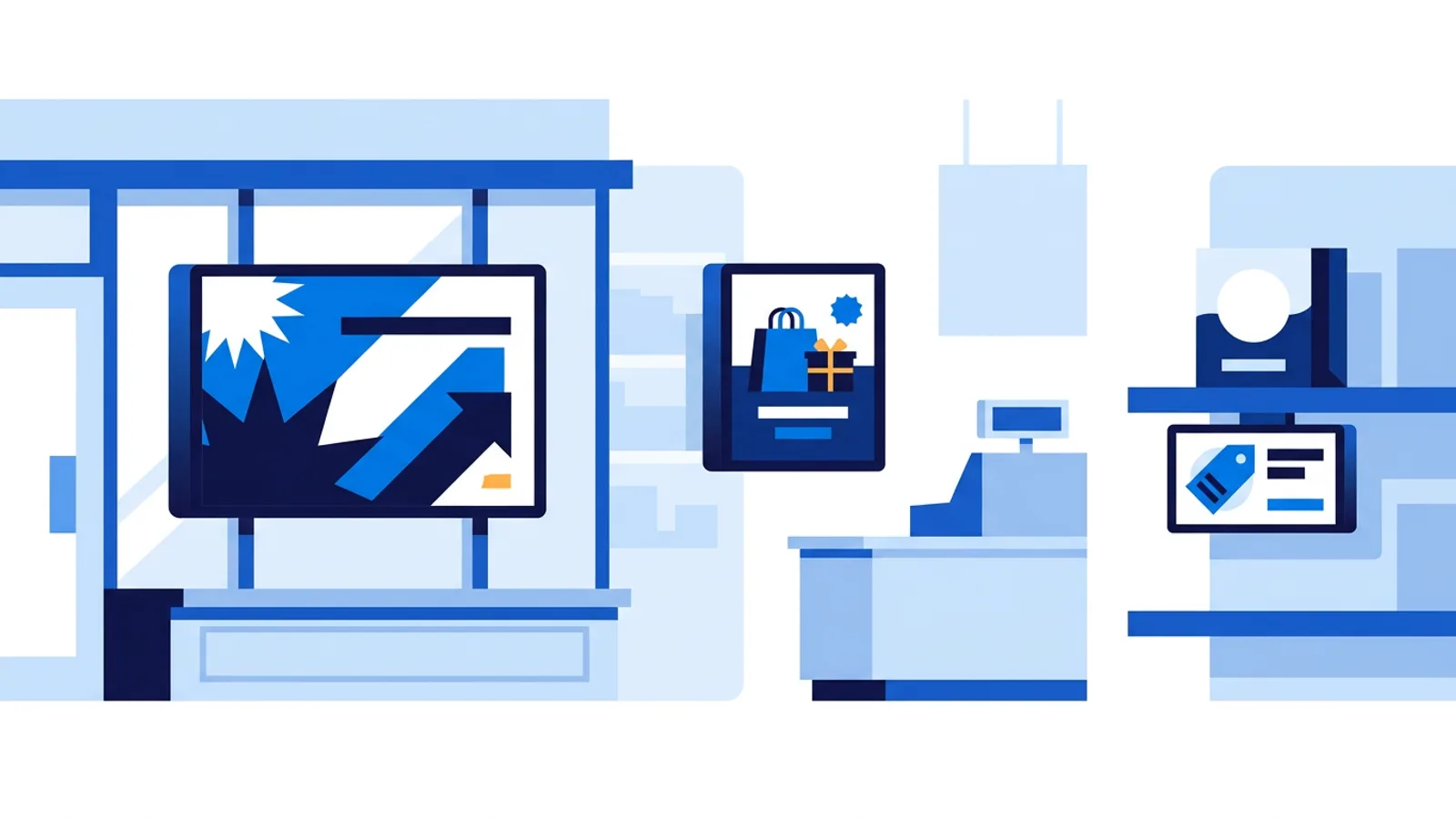
Retail stores waste a lot of digital signage by treating every screen the same: one TV near the entrance looping every promo, product photo and holiday notice at once. Digital signage for retail stores works better when each screen has one job, whether that's pulling foot traffic through a window, closing an add-on sale near the register, or answering a shopper's question at the shelf edge.
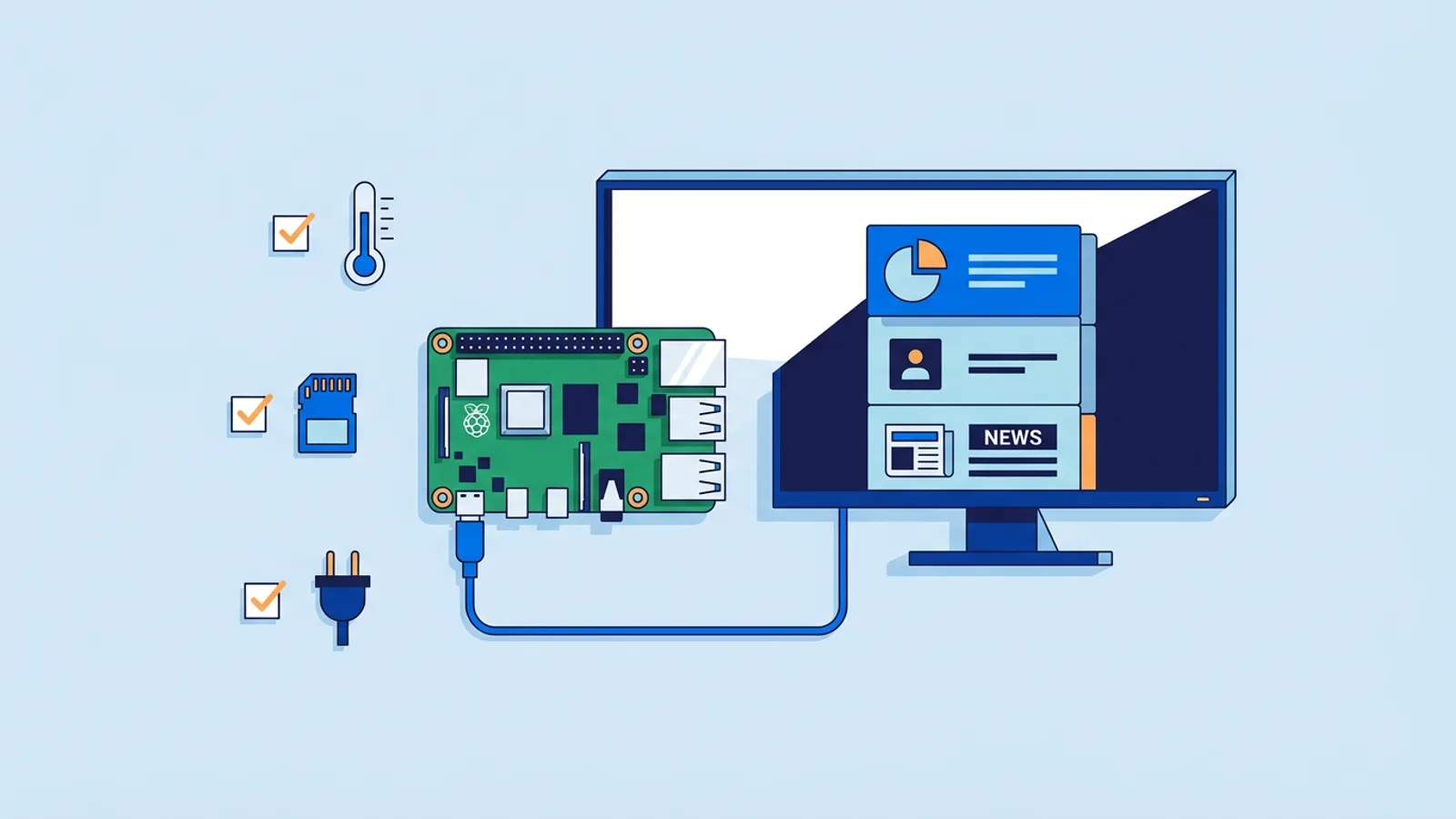
The hardware question comes up first, and it's simpler than most retailers expect. A cheap Raspberry Pi signage player running in kiosk mode handles a window display or a shelf screen fine, and if you already have a smart TV in the store, its built-in browser can run the same content with no extra box. Neither choice locks you into a particular software vendor.
What does lock you in is picking software before you know what each screen needs to do. A window display needs different brightness and content pacing than a screen bolted under a shelf. This retail TV signage playbook walks through the three places retail screens actually pay for themselves, what to put on each, and how to pick hardware without overspending.
Digital signage for retail stores: where each screen earns its keep
Most retail signage falls into three jobs, and mixing them on one screen usually dilutes all three:
- Window screens: sell the store to people who haven't walked in yet. Their audience is outside, often in daylight, moving past at a normal walking pace.
- In-store promo screens: sell a specific item or offer to people already inside, near the register, an endcap, or a fitting room queue.
- Shelf and category screens: answer a question at the point of decision, such as price, spec, stock, or a short demo loop.
Each job has a different screen size, mounting height, brightness need, and content rhythm. Treat them separately and the whole setup gets easier to plan.
Retail window screen ideas that stop foot traffic
Window screens fight two enemies: sun glare and short attention spans. A shopper walking past has two or three seconds of eye contact with your glass, not the thirty seconds a shopper standing at a shelf might give a screen.
For retail window screen ideas, focus on:
- One message per slide, large type: a window screen is read from the far side of glass, sometimes with reflections. Cramming three offers on one slide means none of them land.
- High contrast over subtle branding: pastel-on-pastel looks nice on a laptop and disappears in daylight. Dark backgrounds with bright, saturated call-to-action text hold up better against sun glare.
- Portrait orientation for narrow storefronts, landscape for wide display windows. If you're not sure which fits your space, our portrait rotation guide covers the tradeoffs.
- Rotation on a schedule, not by hand: a lunch special that should disappear at 2pm and a weekend sale that should only run Friday through Sunday are exactly what calendar-based scheduling is for, so nobody has to remember to swap the playlist manually.
- A countdown for anything time-limited: a flip-style or digital countdown to "Sale ends Sunday" creates more urgency on a window than static text.
Avoid full-motion video with a lot of dark frames in bright storefronts; it reads as murky next to daylight. Still images and simple animated text generally read better through glass than video does.
In-store promo displays that move product
Once a shopper is inside, the screen's job changes from stopping a passerby to adding one more thing to the basket. This is where an in-store promo display near the register, an endcap, or a fitting room area pays off.
Near those spots, a promo display can:
- Pull bestseller and low-stock tiles straight from store data. If the store runs on Shopify, WooCommerce, Magento or Lightspeed eCom, a connected dashboard shows today's bestsellers and stock levels live, so the screen reflects what's actually selling instead of a static "featured items" slide someone forgot to update in March.
- Show a revenue or order counter for team motivation in a back-of-house area, using a Mollie or Stripe connection if the store checks out through either.
- Carry a QR code linking to a loyalty signup or an online exclusive, built directly in a canvas-style designer rather than pasted in as a low-res sticker photo.
- Rotate Google or Trustpilot reviews between offers to build trust while someone waits in a checkout line.
For deeper structure on what to actually put on rotation across a week, the content ideas guide has a longer list than fits here.
Shelf-edge and small screens
Shelf screens are the quiet workhorse of retail signage: small, mounted close to product, and usually ignored until a shopper is already standing there deciding. Their content should be short and answer one of three questions: what is this, how much, and does it work.
Good shelf-screen content includes a 10-15 second demo loop of the product in use, muted, with captions; price and a one-line spec sheet, refreshed via a schedule rather than reprinted paper tags; and a QR code to reviews or a size guide, useful in categories like footwear or electronics where shoppers research on their phone anyway.
Shelf screens are also the easiest place to overspend on hardware. A small screen running a 15-second static loop doesn't need a powerful media player; a Raspberry Pi or even a browser-based smart display handles it without breaking a sweat.
Picking hardware for each placement
| Placement | Typical size | Good hardware fit | Notes |
|---|---|---|---|
| Window display | 43"-55" | Raspberry Pi or a browser on a commercial display | Needs anti-glare glass or a bright panel |
| In-store promo | 32"-50" | Raspberry Pi, smart TV browser | Near power outlets, at eye level, register or endcap |
| Shelf/category | 10"-24" | Raspberry Pi with a small monitor | Low power draw, tucked into fixtures |
A Raspberry Pi 4 or 5 covers all three rows comfortably; the choice between them mostly comes down to how much video you're pushing, which is covered in our Pi 4 vs Pi 5 comparison. If a store already owns smart TVs, the browser route skips buying any extra box at all, at the cost of losing the CEC power scheduling and the self-healing watchdog a dedicated Pi player gets you.
Scheduling multiple promos without babysitting screens
A single retail store easily ends up with a lunch special, a weekend sale, a seasonal window theme and a loyalty QR code all needing to appear on different days and different screens. Calendar-based scheduling handles this by assigning playlists to specific weekly slots or one-off dates, with a default playlist falling back automatically when nothing is scheduled. Blackout dates handle holidays without extra manual work. If you're managing more than a handful of screens or promo cycles, the scheduling guide walks through the setup in more detail.
When TVpilot fits, and when it doesn't
TVpilot is a good fit for a retailer running more than one or two screens who wants a web dashboard to swap playlists, schedule promos ahead of time, and connect live store data (Shopify, WooCommerce, Mollie, Stripe, bol.com) without hand-editing slides every day. The Free plan covers one screen at no cost, forever, which is enough to run a single window display before rolling anything out across the rest of the store.
It's a weaker fit if you want to self-host the software on your own servers; TVpilot is hosted SaaS, not open source. It's also not the right choice yet if your only available hardware is a Fire TV Stick and you specifically want a dedicated native app; that route currently runs through the stick's browser rather than a purpose-built app. And if you're running one screen with content that never changes, a simple looping player without any dashboard might genuinely be enough, no need to add a subscription for that.
If your retail setup involves several screens, a mix of promos and live store data, and content that changes weekly or daily, create a free account at tvpilot.app/signup, set up one window or checkout screen on the Free plan at no cost, and add screens or storage only when the store actually needs more.
Frequently asked questions
What size screen works best for a retail window display?
Most stores use something between 43 and 55 inches for a street-facing window, large enough to read at a glance from across a sidewalk. The bigger factor than size is contrast and brightness: a smaller, brighter screen with high-contrast text often reads better through glass in daylight than a large screen running low-contrast pastel graphics.
Can a shelf screen show live stock and pricing data?
If the store runs on Shopify, WooCommerce, Magento or Lightspeed eCom, a connected dashboard can pull live bestseller and stock tiles onto a screen. Shelf screens more commonly show a short demo loop, price and a spec line instead, since that content doesn't need a store integration to stay current.
What can a Mollie or Stripe connection actually show on a promo screen?
A Mollie or Stripe dashboard connection shows live revenue for today, this week or this month, payment volume and average order value, since that's what a payment provider's API has access to. It does not show bestsellers, stock levels or visitor counts; those tiles need a store platform connection like Shopify or WooCommerce instead.
Do I need one type of hardware for the whole store?
No. A Raspberry Pi in kiosk mode covers a window display, an in-store promo screen and a shelf screen equally well, and if the store already owns smart TVs, their built-in browser can run the same content without buying extra hardware. Mixing both approaches in one store is common and doesn't cause any compatibility issues.