Digital Signage for Waiting Rooms: What to Show

A waiting room screen fails for one of two reasons: nobody planned what goes on it, or the hardware is unreliable enough that staff give up and turn it off. Good digital signage for waiting rooms solves both problems with a short rotation of useful, low-stress content and a player that doesn't need daily babysitting.
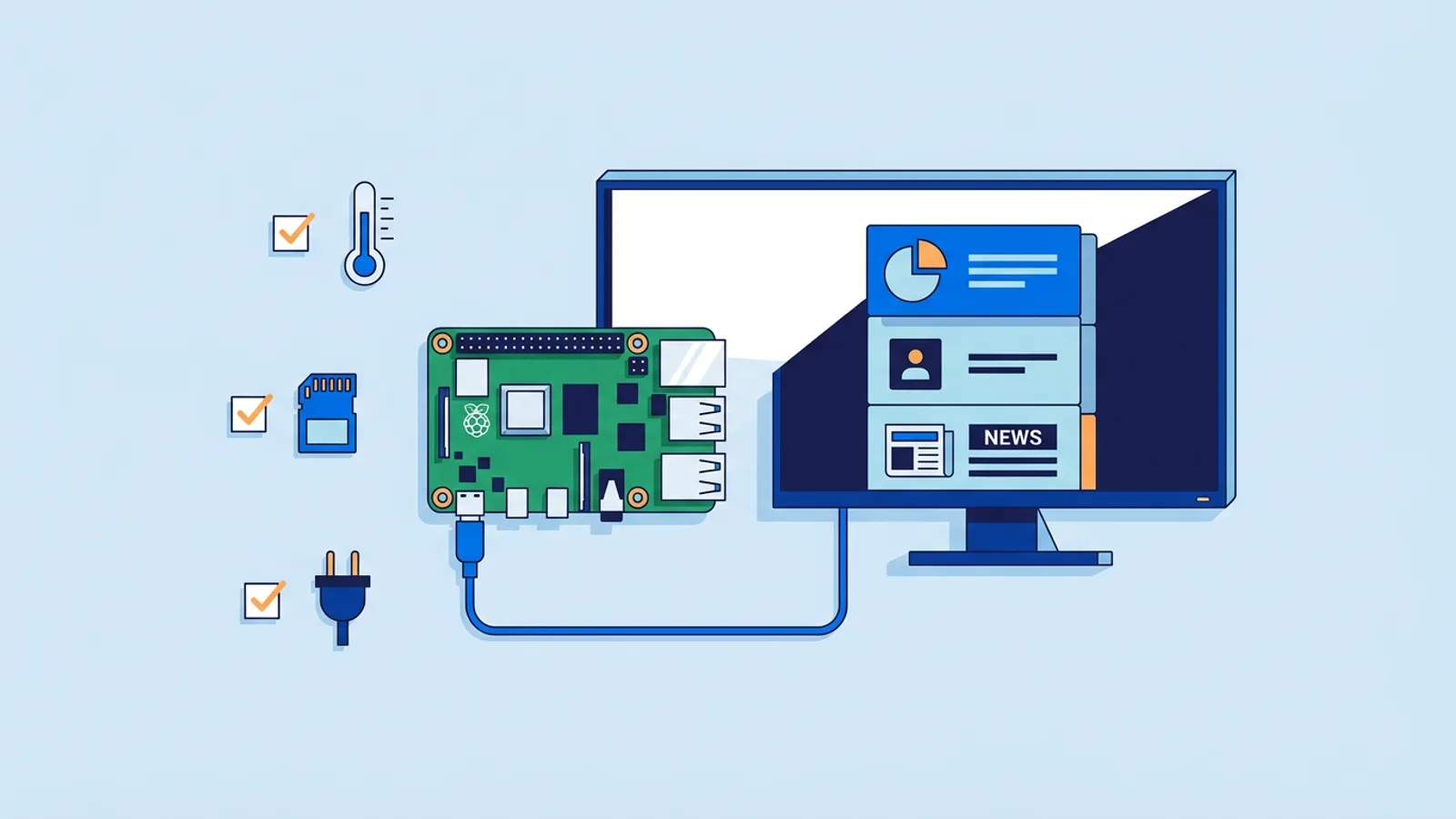
Before getting into content, the hardware question matters because it determines what you can actually do. A lot of clinics and offices already have a spare TV in the corner; the cheapest reliable way to drive it is a Raspberry Pi running a signage player in kiosk mode, which restarts itself if something goes wrong and can turn the TV on and off on a schedule over HDMI-CEC. No smart plug, no manual power button.
What works in digital signage for waiting rooms
People in a waiting room are not a captive advertising audience. They're anxious, bored, or trying to read a form. Content that respects that gets watched; content that feels like a shopping mall kiosk gets ignored or complained about.
The rotation that tends to work:
- Practical information first: today's hours, which doctor or staff member is in, any delays.
- One calm, slow-moving visual (a nature loop, a clock, weather) to give the eye somewhere to rest between information slides.
- A handful of service or price slides, updated when they're actually out of date, not left stale for a year.
- Something mildly reassuring or informative if it's a healthcare setting: a health tip, a reminder about insurance cards, a QR code to fill out intake forms before being called.
Keep each slide on screen long enough to actually read, and don't cram six data points onto one frame. A crowded screen next to a waiting patient reads as noise, not information.
Clinic TV display ideas that don't feel like an ad break
For medical, dental and veterinary waiting rooms, the content that gets the fewest complaints is the content that helps someone get through their visit faster or feel less lost:
- Practice hours, including today's specific hours if they differ from the standard schedule.
- Which practitioners are in today, with photos if the practice is small enough that names mean something to patients.
- Insurance and payment reminders ("please have your insurance card ready").
- A QR code linking to an online intake form, so people fill it out on their phone instead of on a clipboard.
- General health reminders: flu shot season, appointment booking for annual checkups, hand-washing signage during outbreak season.
The nature or aquarium loop mentioned above earns its screen time here more than almost anywhere else in a medical setting; keep it as the palette cleanser between information slides rather than running it constantly.
Avoid pharmaceutical-style promotional content and avoid anything that could be read as diagnosing or alarming. If in doubt, the tone should be closer to an airport departure board than a billboard.
Office waiting room screen: for reception areas, not medical
A law firm, accountant's office, car dealership service bay, or corporate lobby has a different job to do: make visitors feel the business is organized and give them something mildly useful while they wait for a meeting.
- Meeting room status if visitors are waiting near conference rooms (free/busy, current booking, what's next).
- Company news or a scrolling ticker of recent press mentions.
- A live social feed from the company's Instagram, if that's part of the brand.
- A welcome message with the visitor's host name, if the front desk can push that manually or via a booking integration.
If the space also functions as a general lobby, it's worth reading the piece on welcome screen design for a lobby or reception for layout guidance specific to that first-impression moment.
Reception TV content: the practical checklist
Here's a rough guide by venue type, useful as a starting rotation before you tune it based on what visitors actually ask about at the front desk:
| Venue | Core content | Avoid |
|---|---|---|
| Medical/dental clinic | Hours, staff in today, intake QR code, health reminders | Pharma ads, alarming statistics |
| Veterinary clinic | Hours, staff photos, pet health tips, adoption events | Graphic imagery |
| Law/accounting office | Meeting room status, company news, clock/weather | Case results with client names |
| Car dealership service bay | Service specials, wait-time estimate, shop hours | Aggressive sales pitches |
| Corporate/coworking lobby | Meeting room panel, welcome message, social feed | Internal HR announcements visible to outside visitors |
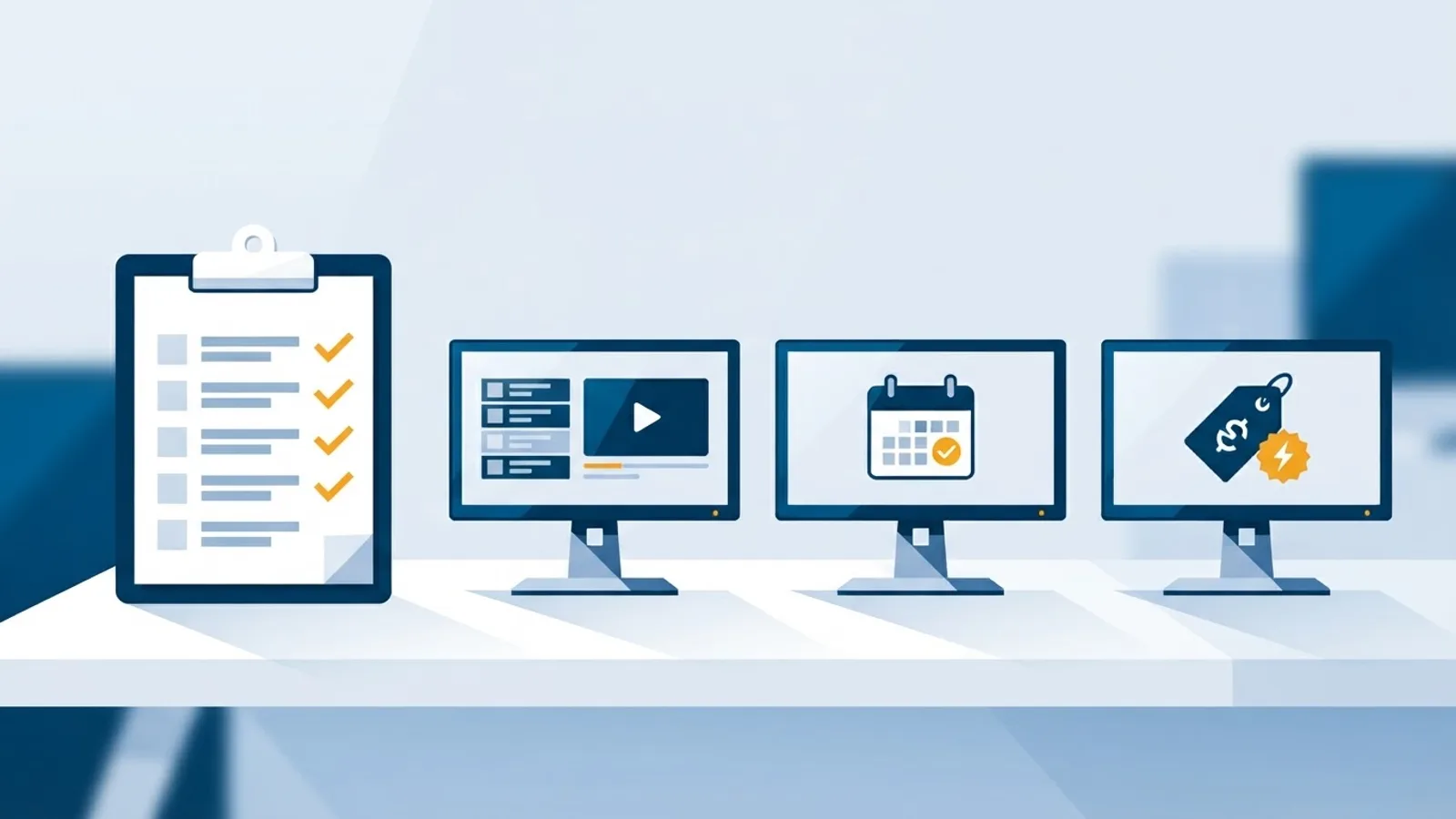
Whatever the venue, changing content by time of day helps more than most people expect. A clinic can show intake reminders during morning rush and a calmer nature loop in a quiet afternoon slot; an office lobby can show meeting-room status during business hours and a simple closed message after hours. That kind of per-slide dayparting, and full calendar scheduling for swapping entire playlists (a different rotation on Mondays vs. weekends, for instance), is exactly what a scheduling feature in a signage tool is for, rather than someone manually swapping USB sticks.
Hardware: what to run the screen on
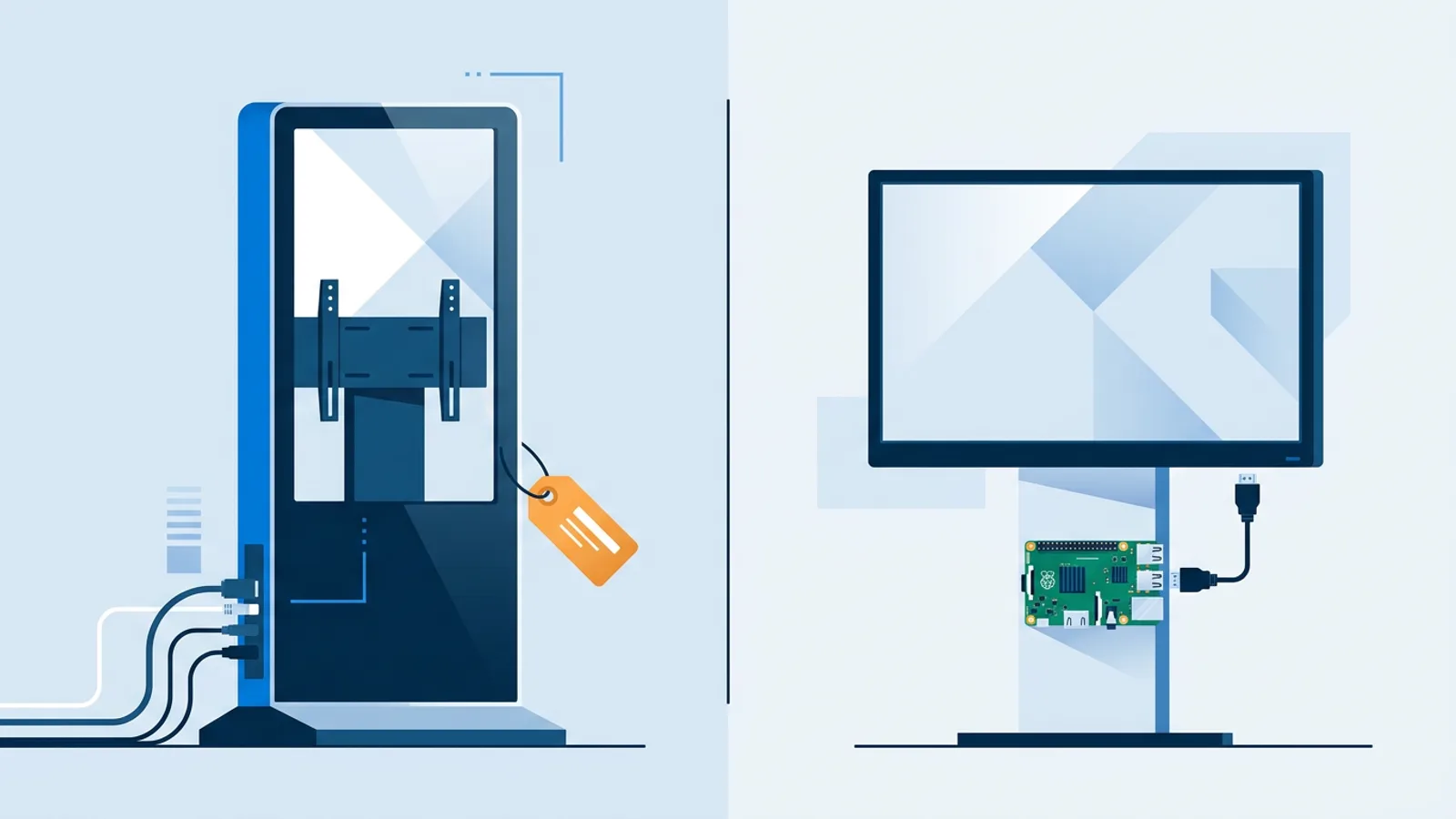
Most waiting rooms already own the TV; the question is what drives it. Three realistic options:
- A Raspberry Pi with a signage player installed via a one-line setup command, running Chromium in kiosk mode. This is the cheapest route for a business that already has a TV and just needs a small always-on box behind it.
- A smart TV's built-in browser, pointed at a signage player URL. No extra hardware, but performance and reliability depend on the TV's own browser.
- An old laptop or mini PC repurposed as a dedicated player, if one is sitting unused in a closet.
For a single-screen waiting room, a Pi is usually the most predictable choice: it doesn't share resources with a TV's other apps, and a watchdog process restarts the player automatically if something crashes, rather than requiring someone to notice a frozen screen and unplug it.
When TVpilot is (and isn't) the right fit
TVpilot is a fit for waiting rooms that want a dashboard where non-technical staff can update hours, swap a slide, or push an urgent "closed early today" message without touching the player hardware. The free plan covers one screen at no cost, which is enough for a single-location clinic or small office reception to try the whole workflow before deciding whether to pay for more screens or storage.
It's a better fit than a plain looping USB stick if the practice changes staff schedules often, runs different content on different days, or wants a meeting room panel, a QR code linking to an intake form, or review widgets pulling from Google or Trustpilot automatically.
It's a weaker fit for a practice that genuinely never changes its signage content and just wants a photo slideshow on a loop forever; in that case a basic USB drive or a free player with no dashboard at all is simpler, and paying monthly for a CMS would be overkill. It's also not the right tool for anyone who specifically needs to self-host their signage software on their own server: TVpilot is hosted SaaS, not open source.
Start with the content ideas guide if the rotation still feels thin, then set up a free account and get the first screen showing something useful before the next patient sits down.
Frequently asked questions
What should a medical clinic show on its waiting room TV?
A short rotation works best: today's hours, which practitioners are in, insurance or payment reminders, a QR code linking to an online intake form, and a calm nature or aquarium loop between information slides. Skip pharmaceutical-style ads and anything that could read as alarming or diagnostic.
How often should waiting room content change?
Update factual slides (hours, staff, prices) as soon as they're wrong, not on a fixed calendar. For pacing, swap ambient content or emphasis by time of day, for example intake reminders during morning rush and a calmer loop in a quiet afternoon slot, using per-slide scheduling or a calendar-based playlist swap.
Do I need a smart TV to run digital signage in a waiting room?
No. A regular TV with an HDMI port works fine if you add a small player behind it, such as a Raspberry Pi running a signage player in kiosk mode. A smart TV's built-in browser can also work if you point it at a player URL, though reliability depends on that TV's own browser.
Is TVpilot only for medical clinics, or does it work for general office reception areas?
It works for both. The content differs (health reminders and intake QR codes for clinics versus meeting-room status and company news for offices) but the same dashboard, scheduling, and screen-monitoring tools apply to either use case.