Fire TV Stick Kiosk Mode for Digital Signage
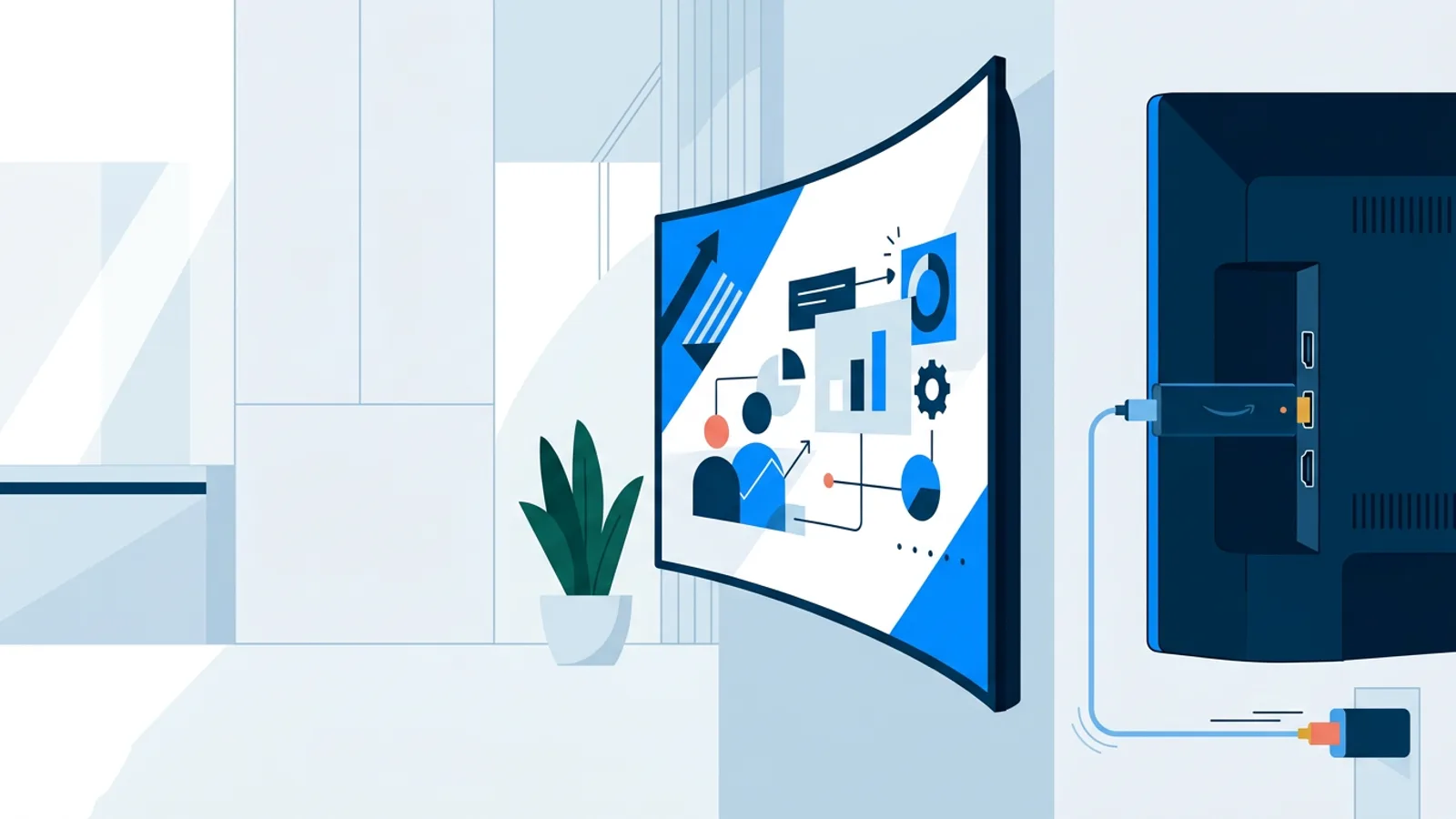
A Fire TV Stick can run digital signage, but getting it into a true fire tv stick kiosk mode takes some work, because Amazon built the device to sell you shows and apps, not to display a locked playlist all day. If you already own a stick and want to know whether it's worth the effort before buying dedicated hardware, here's what actually works and what doesn't.
If you're comparing hardware options before committing, our Fire TV Stick signage page walks through setup for running a browser-based player on the device. This article goes deeper into the kiosk mode question specifically: how to lock the stick down so it only shows your content and nothing else.
Why Fire TV isn't built for signage out of the box
Amazon's Fire OS is Android underneath, but it's a heavily customized version aimed at a living room remote-control experience. Out of the box, a Fire TV Stick:
- Boots to a home screen full of recommended shows and ads
- Has no built-in "lock this app open" setting for third-party apps
- Sleeps the screen and shows a screensaver after inactivity
- Expects a remote, not a wall-mounted always-on display
None of that is a problem for streaming Netflix. All of it gets in the way if you want fire stick digital signage that runs unattended in a lobby, waiting room, or storefront window.
The three practical routes to a locked-down Fire Stick
1. Sideload a dedicated kiosk browser app
The most reliable approach is installing a kiosk-mode browser app via sideloading (since these apps generally aren't in the Amazon Appstore) using a tool like Downloader. A kiosk browser app opens directly to a URL you specify, hides system UI, and can be set to launch automatically on boot. This gets you closest to real signage behavior: one app, one screen, no remote needed after setup.
2. Use the built-in Silk or Firefox browser with manual lockdown
If you'd rather not sideload anything, you can use whatever browser is available on the stick and manually disable auto-sleep, set it as the default launch app, and accept that a stray remote press could exit the app. This works for low-traffic environments where nobody but you touches the remote, but it's fragile.
3. Screensaver or slideshow apps
Some people try to fake signage using Fire TV's photo screensaver feature, pointing it at a folder of images. This can display a rotating set of pictures, but it's not real signage: no scheduling, no live web content, no remote updates, and it still requires an active foreground app or the screensaver won't engage. Treat it as a stopgap, not a solution.
Setting up a Fire TV Stick for digital signage step by step
For the sideloaded kiosk browser route, the general process looks like this:
- Enable Developer Options on the Fire TV Stick (Settings > My Fire TV > About, click the device name several times).
- Turn on "Apps from Unknown Sources" in Developer Options.
- Install the Downloader app from the Amazon Appstore.
- Use Downloader to fetch and install a kiosk browser APK.
- Open the kiosk app, enter the URL you want displayed full-screen, and set it to auto-launch on boot.
- Go to Settings > Display & Sounds and turn off the screensaver, or set it to a long enough timeout that it won't trigger during active hours.
- Set the Fire TV Stick as the default app on startup, if the kiosk app supports it, so a power blip doesn't drop you back to the Amazon home screen.
If your signage platform serves a web-based player URL (most do), this is the same basic pattern you'd use on any browser-capable device, similar to running Chromium kiosk mode on a laptop or mini PC.
The catch with fire tv stick kiosk mode
Even once it's running, a Fire TV Stick in kiosk mode has real limits compared to hardware built for signage:
- No self-healing. If the browser crashes or the network drops mid-update, there's no watchdog process to restart it. Someone has to notice the screen is stuck and pull the plug.
- No remote reboot. You can't push a restart from a dashboard. Fixing a frozen screen means physically unplugging the stick.
- Firmware updates can reset settings. Amazon periodically pushes Fire OS updates, and one of them may reset your default-app setting or re-enable the screensaver, breaking the kiosk setup silently.
- Sideloading depends on apps staying available. Amazon doesn't officially support kiosk use, so a browser app you rely on could change behavior or disappear from update to update.
None of these are dealbreakers for a single low-stakes screen you can walk past daily. They matter more once you're running several screens across locations, where a silent freeze means lost signage time nobody catches for days.
When a Fire TV Stick is the right call, and when it isn't
A Fire Stick makes sense when you already own one, want to test amazon fire tv signage for a single screen before buying anything else, and can check on it in person every so often. It's genuinely fine for a break room TV or a one-off event display where a stuck screen for a few hours isn't a big deal.
It's the wrong tool when you need reliable unattended operation, multiple screens managed centrally, or scheduled power on/off without someone physically at the device. For those cases, a Raspberry Pi running a proper signage player, or a smart TV with a built-in browser, tends to hold up better over months of continuous use.
Fire TV Stick vs other cheap signage hardware
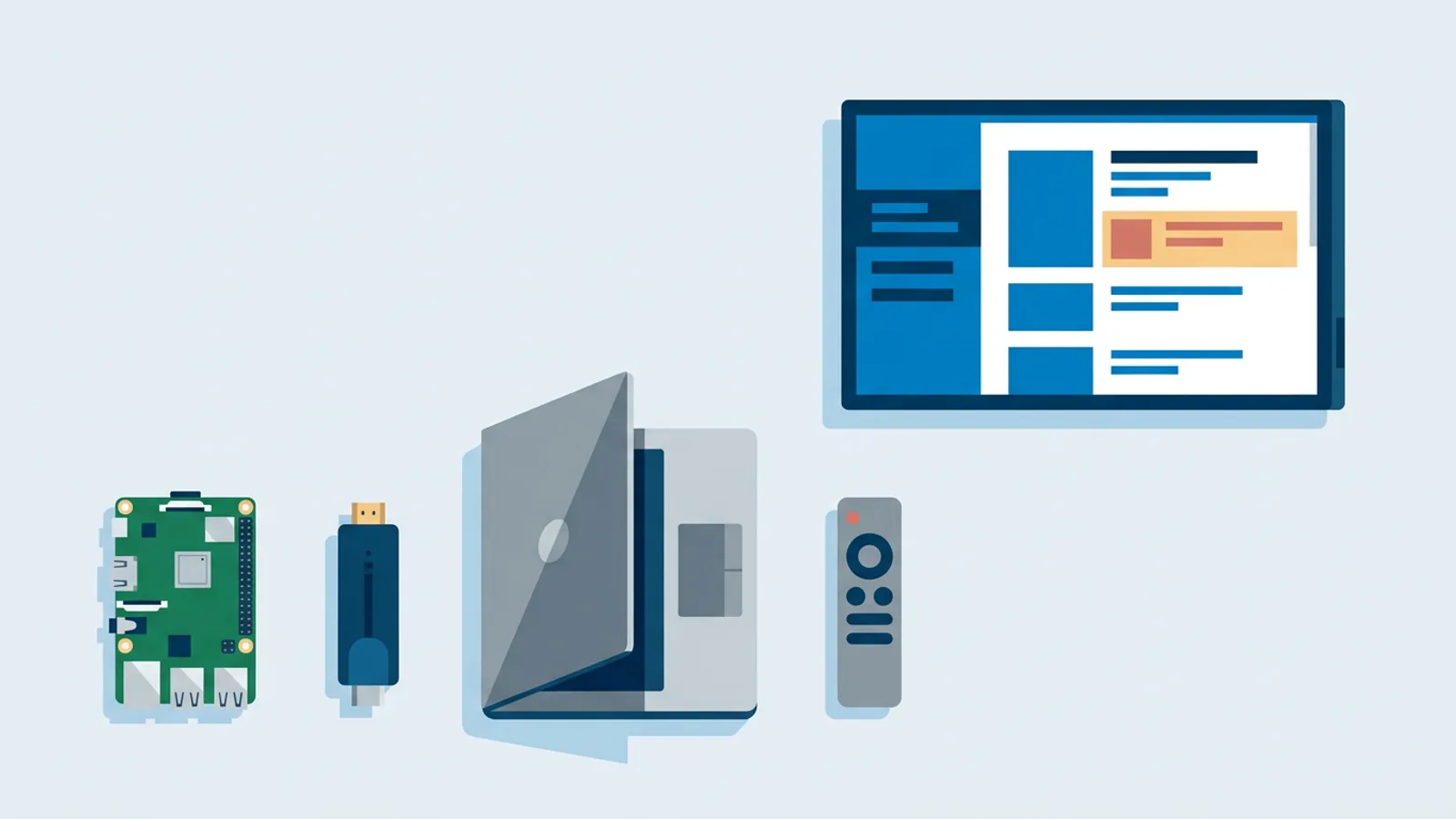
| Hardware | Setup effort | Reliability for unattended use | Remote management |
|---|---|---|---|
| Fire TV Stick (sideloaded kiosk) | Moderate, requires sideloading | Weak, no watchdog or remote reboot | None built-in |
| Raspberry Pi | Low with a one-command installer | Strong, with self-healing watchdogs | Full, via dashboard |
| Smart TV built-in browser | Low, just open a URL | Depends on TV, varies by brand | Depends on TV |
If you're weighing options from scratch rather than working with a stick you already own, our cheapest digital signage player comparison covers a wider range of hardware, including how a Raspberry Pi setup compares on total cost.
Getting it running with TVpilot
TVpilot doesn't have a dedicated native app for Fire TV yet, so the practical path is the browser route: sideload a kiosk browser, point it at your TVpilot player URL, and manage playlists, scheduling, and screen status from the dashboard. That gets you centralized content management even without a native app, though you still won't get the watchdog and remote-reboot behavior that TVpilot's Raspberry Pi player has built in.
If reliability across multiple screens matters more than reusing a stick you already have in a drawer, a Raspberry Pi is worth the extra ten minutes of setup. The Raspberry Pi signage page covers the one-command installer, and TVpilot's free plan covers one screen with no credit card required if you want to compare both approaches side by side.
Set up a free account at /signup and try both the Fire TV Stick browser route and a Raspberry Pi player before deciding which one earns a permanent spot on the wall.
Frequently asked questions
Can you put a Fire TV Stick into true kiosk mode without sideloading anything?
Not reliably. The built-in browser on Fire TV doesn't have a native kiosk or lockdown setting, so without sideloading a dedicated kiosk browser app, a stray remote press or the screensaver can knock you out of full-screen mode. Sideloading via the Downloader app is the standard way to get a real lockdown.
Will a Fire OS software update break my signage setup?
It can. Amazon periodically pushes Fire OS updates that sometimes reset the default-launch-app setting or re-enable the screensaver, which silently breaks a kiosk setup until someone notices the screen is wrong and fixes it manually. There's no way to prevent this on Fire TV; you just have to check on the device periodically.
Is a Fire TV Stick good enough for a business with multiple screens?
For one screen you check on regularly, it can work. For multiple locations or screens you can't walk past daily, the lack of remote reboot and automatic recovery on Fire TV becomes a real liability, since a frozen screen has to be fixed by unplugging it in person. Hardware like a Raspberry Pi, which includes a self-healing watchdog and remote reboot from a dashboard, holds up better at that scale.
Does TVpilot have a native Fire TV app?
No, not yet. TVpilot runs on Fire TV through the browser route: you sideload a kiosk browser app and point it at your TVpilot player URL, which gives you full dashboard control over content and scheduling, just without the watchdog and remote-reboot features built into TVpilot's Raspberry Pi player.