Digital Signage on Guest Wi-Fi: Fixing Captive Portals
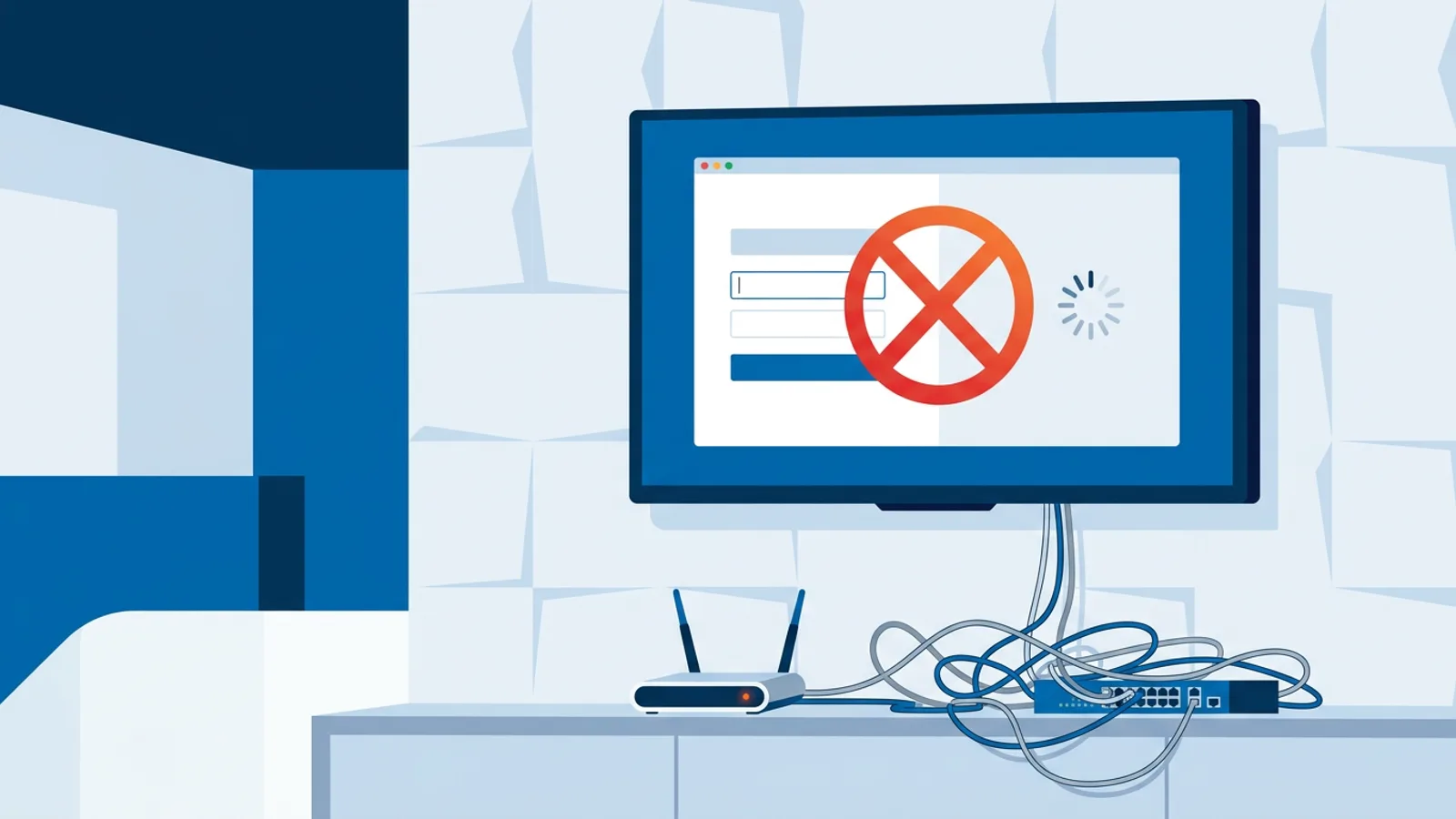
A screen that goes black every morning until someone walks over and taps "I Agree" on a login page usually has a network configuration problem behind it. This is the classic digital signage guest wifi captive portal problem, and it shows up anywhere a screen shares Wi-Fi with guests: the hotel lobby TV, the gym reception screen, the co-working space that only offers guest access. The player boots, tries to reach the internet, gets redirected to a login page it can't click through, and sits there showing nothing useful.
This happens because captive portals are designed for humans with browsers, not headless media players. A guest's laptop opens a browser, sees the redirect, and lets the person click through. A signage box has no one to click anything. If you're setting up a Raspberry Pi player for one of these locations, read the Raspberry Pi signage setup guide first, because most of the fixes below happen at the network and OS level, not in the signage software itself.
Digital signage guest wifi captive portal problems, explained
A captive portal works by intercepting the player's first few HTTP requests and returning a redirect to a login or terms page instead of the real destination. Devices detect this two ways: they either notice the response doesn't match what they asked for, or they ping a known connectivity check URL (Apple, Google and Android all use different ones) and see if it comes back clean. Until that check passes, many operating systems flag the connection as limited or refuse to route real traffic through it at all.
For a signage player this means:
- The player can't reach the dashboard to pull playlists or check the schedule.
- Media that's cached locally might still play, but nothing updates.
- After a router reboot, firmware update, or lease renewal, the portal can re-trigger and lock the player out again.
- Some hotel and venue networks re-authenticate every 24 hours by design, so a screen that worked yesterday can silently drop offline overnight.
None of this is specific to any particular signage software. It comes from how the network handles new devices, and the fix lives on the network side.
The real fixes, in order of reliability
The three fixes below actually solve the captive portal problem, in order of how reliable and how easy they are to get someone to implement. A fourth thing worth doing (covered after these) doesn't touch the portal at all; it just keeps a screen from going blank if the network drops for other reasons.
1. Get off the guest network entirely
The most reliable fix is also the simplest: don't put the signage player on the same Wi-Fi that guests authenticate through. Ask whoever manages the property's network for one of these instead:
- A dedicated SSID or VLAN for "back of house" or "staff" devices that skips the portal.
- A wired Ethernet drop. Most captive portals are Wi-Fi-specific; a lot of hotel and office networks route wired ports straight to the internet without a login page.
- A static IP or DHCP reservation on the main network, outside the guest subnet.
This is the answer IT staff usually reach for anyway, because it also stops the signage device from competing with guest traffic for airtime on a congested access point.
2. Whitelist the player by MAC address or domain
If a separate network isn't possible, most commercial captive portal systems (the kind used in hotel PMS integrations, gyms, and coworking chains) support a whitelist. Ask the network admin to add:
- The player's MAC address, so the portal never intercepts it in the first place, or
- The specific domains the player needs to reach, so traffic to those destinations passes through untouched even while the portal is active for everyone else.
This keeps the player on the guest network but exempts it from the login flow. It's the standard approach for lobby kiosks, PMS terminals and anything else that has to sit on guest Wi-Fi permanently.
3. Disable connectivity checks that trigger false portal detection
Sometimes there's no real captive portal, but the device still thinks there is because a firewall or DNS filter on the network blocks the connectivity check URL the OS uses to test for internet access. On Raspberry Pi OS this shows up as the network being "connected" but the browser treating it as offline. If you manage the router, allow outbound access to the standard connectivity check endpoints (msftconnecttest.com, connectivitycheck.gstatic.com, captive.apple.com are common ones) even if you can't whitelist by MAC. If you don't manage the router, this is one more reason to escalate to whoever does rather than trying to patch it from the player side.
A separate problem: what to do about outages, not portals
Even with a clean network path past the portal, guest Wi-Fi in hotels and shared buildings goes down more than a dedicated business line, for reasons that have nothing to do with login pages: overloaded access points, ISP hiccups, maintenance windows. That's a different failure mode, and it's worth handling separately rather than lumping it in with the portal fix.
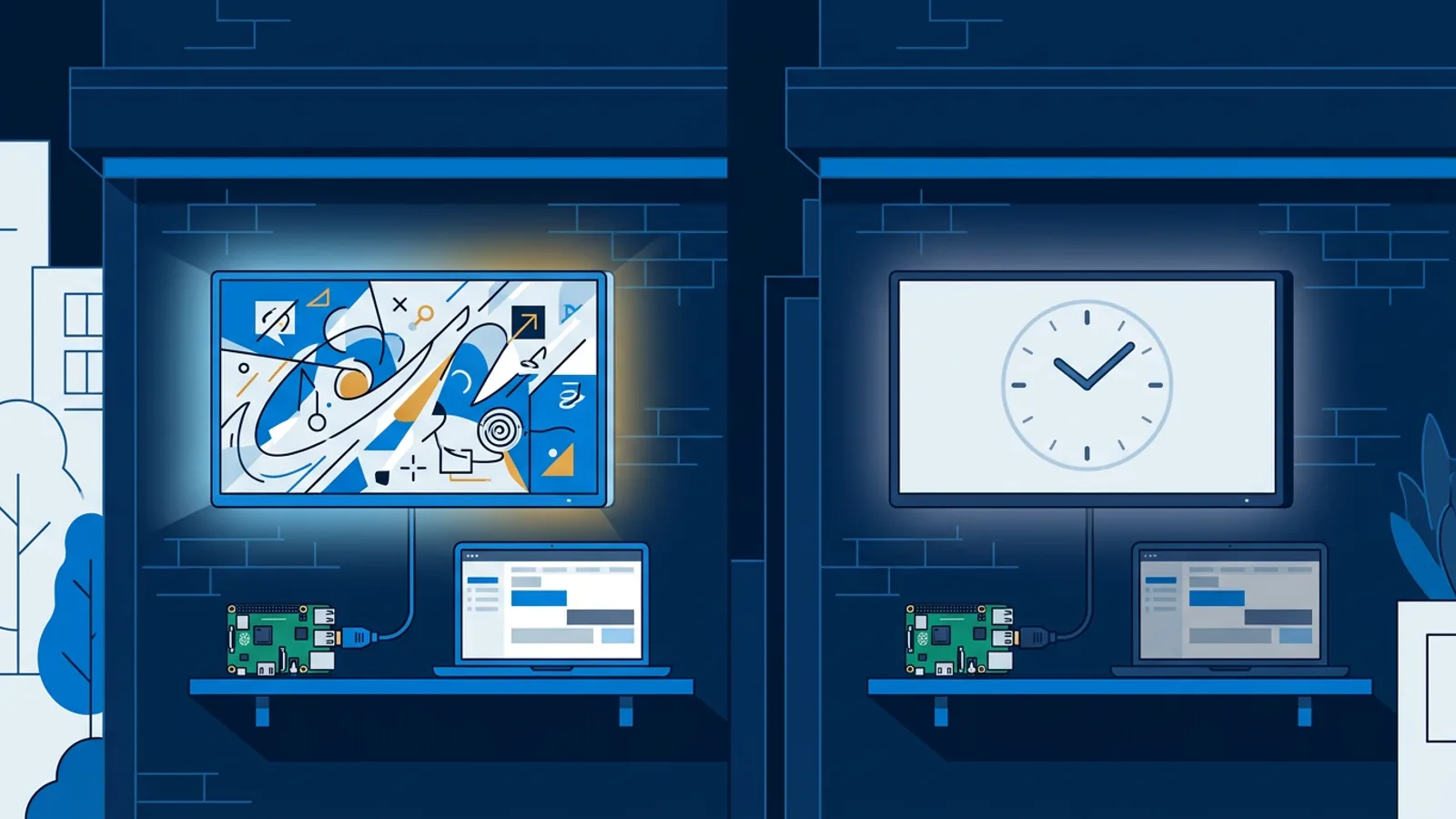
TVpilot's Raspberry Pi player keeps a self-healing watchdog running that restarts the player process within about ten seconds if it crashes, and it checks for updates once a day at 3am rather than constantly polling, so a flaky connection doesn't turn into a boot loop. Calendar-based scheduling on the dashboard also keeps following its plan during an outage, and each screen can carry a backup playlist that plays automatically if the assigned content is empty or unreachable, so a network hiccup shows something on the wall instead of a black screen. None of that gets a player past a captive portal; it just means a screen that briefly drops offline for other reasons doesn't go dark.
| Fix | Effort | Reliability | Who does it |
|---|---|---|---|
| Separate SSID/VLAN or wired drop | Low, one config change | Highest | Network admin |
| MAC or domain whitelist on the portal | Low to medium | High | Network admin / portal vendor |
| Allow connectivity check URLs through firewall | Low | Medium (fixes false positives only) | Network admin |
| Backup playlist + watchdog on the player | Already built in | Covers outages, not portal blocks | Signage software |
Diagnosing it before you blame the wrong thing
Before asking IT to change anything, confirm the portal is actually the cause. Check the player's screen monitoring page (TVpilot shows online/offline status, last heartbeat, and Wi-Fi signal strength per screen) to see the pattern: does the screen drop at a consistent time each day, right after a router reboot, or randomly? A daily drop around the same hour usually points to a portal re-authentication cycle. Random drops with weak signal readings point to a coverage problem instead, and no amount of whitelisting fixes a screen that's just too far from the access point.
If you're troubleshooting a Pi player specifically, the Raspberry Pi signage troubleshooting guide covers the general connectivity checks worth running before escalating to the network team. It also helps to understand what the player actually needs to download and how often, covered in the bandwidth requirements guide, since some venues throttle guest bandwidth per device and a signage player pulling large video files can get rate-limited even after the portal issue is solved.
What TVpilot can and can't fix here
TVpilot is hosted software: the player needs an internet connection to pull new content and schedule changes, and it isn't self-hostable behind a closed network with no outbound access at all. If a property genuinely has no way to reach the internet from the signage location, that's a hardware and network problem no signage vendor can solve from the dashboard side. Where TVpilot does help is everything downstream of getting online: once the player has a clean path out, calendar scheduling keeps working through outages, the backup playlist covers gaps, and remote monitoring shows which screens are actually having network trouble versus which ones just look offline.
Ask whoever manages the property's network for a separate SSID, a MAC whitelist, or a wired drop, and the redirect loop stops. Set up a Raspberry Pi player and start building the playlist once the network side is sorted.
Frequently asked questions
Why does my signage screen show a Wi-Fi login page instead of playing content?
The screen is on a guest network with a captive portal, and the portal is intercepting the player's connection requests the same way it would intercept a guest's laptop browser. Since a signage player has no one to click through the login page, it can't complete the portal's authentication step and stays stuck without internet access. The fix is on the network side: get the player off the guest network, or get it whitelisted so the portal skips it.
Can I whitelist a Raspberry Pi signage player on a hotel or venue captive portal?
Usually yes, if the portal is a commercial system (common in hotel PMS integrations, gyms, and coworking chains). Ask the network administrator to add the player's MAC address to the portal's whitelist, or to whitelist the specific domains the player needs to reach. Once whitelisted, the player passes through without ever seeing the login redirect, while guest devices still go through the normal portal flow.
Will TVpilot work if the venue's guest Wi-Fi has no reliable internet at all?
Not fully. TVpilot is hosted software, so the player needs an internet connection to pull new content and schedule updates, and it isn't self-hostable on a fully closed network. If a location truly has no outbound internet path, that's a network problem to fix first. Once the player has a clean connection, TVpilot's backup playlist and calendar scheduling keep screens showing something during short outages that happen afterward.
How do I tell if a blank signage screen is a captive portal issue or just a weak Wi-Fi signal?
Check the screen's monitoring page for online/offline history and Wi-Fi signal strength. A screen that drops at roughly the same time every day, or right after a router reboot, points to a captive portal re-authentication cycle. A screen that drops at random times alongside consistently weak signal readings points to a coverage problem instead, which whitelisting won't fix; that needs a better access point placement or a wired connection.