Digital Signage One Screen vs Multiple Screens Guide
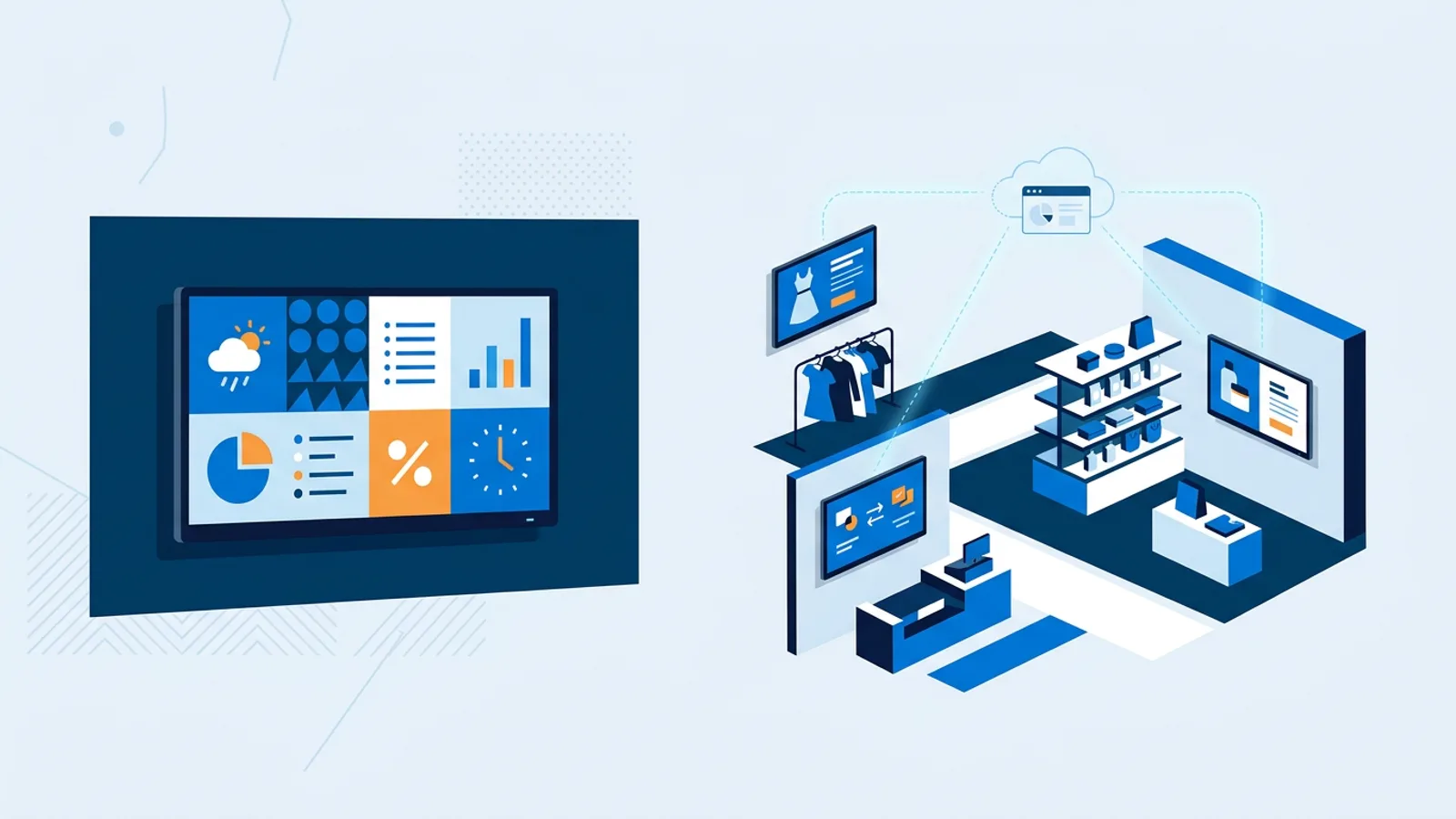
Most small businesses start digital signage with one TV near the counter or waiting area, and for a lot of them that's the right permanent setup, not just a starting point. The question of digital signage one screen vs multiple screens comes down to how many distinct messages, zones, or audiences you actually have, not how big your business feels. If you're weighing your first screen at all, the Raspberry Pi signage guide covers the cheapest reliable way to run one.
A single well-placed screen can carry opening hours, a menu, promotions, reviews, and a countdown to a sale, all rotating in one playlist. Plenty of cafes, salons, and clinics run exactly one screen for years without feeling limited. The mistake is either direction: buying three screens on day one because a vendor pitched a "network," or cramming six unrelated message types onto one screen until nobody reads any of them.
Digital Signage One Screen vs Multiple Screens Explained
Adding screens doesn't just add a TV bill. It changes what you're managing. One screen is a playlist and a schedule. Multiple screens means deciding which content goes where, whether screens sync or run independently, and how you'll notice if one goes dark in a back room nobody walks past. None of that is hard, but it's real work, and it should be driven by a genuine need, not by the assumption that more screens automatically means more sales.
The honest baseline: one screen is enough until you have more than one physical zone that needs different information at the same time.
What a single screen already handles well
A single screen does a surprising amount of work if the playlist is built well:
- Rotating promotions, menu items, and opening hours in one loop
- A morning schedule and an afternoon schedule using per-slide dayparting, so lunch specials appear only 11:00 to 14:00 without anyone touching it
- A calendar-driven plan where a holiday menu or event slide takes over for a day and reverts automatically afterward
- A backup playlist so the screen never goes black if content is briefly empty
If your business is one room, one counter, one waiting area, this is very likely all you need. Buying a second screen to "add variety" to the same room usually just splits attention rather than adding value. See our digital signage content ideas piece if the real problem is that the playlist is stale, not that there's too little screen real estate.
How many digital signage screens do I need?
There's no fixed ratio, but three questions get you most of the way there:
- Do people in different rooms need different information at the same time? A gym with a class schedule in the studio and a smoothie bar menu at reception genuinely needs two screens, because nobody standing at reception needs to see the spin class timetable.
- Is one screen not visible from a whole area? A long counter, a wraparound waiting room, or a shop with two entrances often needs a second screen purely for sightlines, same content, different physical location.
- Would combining messages on one screen force irrelevant content on someone? If your lobby screen shows a wait-time queue but your retail screen fifteen feet away should show product promos, that's two audiences, not one.
If you answer "no" to all three, stay at one screen and improve the playlist instead. If you answer "yes" to even one, that's a legitimate second screen, not scope creep.
Practical Differences in Multi Screen Digital Signage for Small Business
Once you cross into two or more screens, a few things start to matter that didn't before:
Independent vs mirrored content. Some screens should show identical content (two entrances, same message). Others need entirely separate playlists and schedules (reception vs. studio). Decide this per screen, not as a blanket policy.
Monitoring. With one screen, if it's off you notice walking past it. With five screens across a building, you won't. TVpilot's screen monitoring shows online/offline status, TV power state, Wi-Fi signal, and can send an email alert when a screen drops offline, which matters more the moment you stop being able to eyeball every TV yourself.
Scheduling limits. Calendar scheduling lets you plan a whole year of content per screen, but plan limits differ: Free allows 1 calendar and 2 scheduled items, Starter 5 calendars and 20 items, Pro and Business 25 calendars and 200 items. A business running lunch specials, happy hour, and seasonal promos across several screens will bump into Free's limits quickly; a single-screen shop with a simple weekly repeat usually won't.
Cost per screen. More screens isn't necessarily more expensive per screen. Here's how TVpilot's plans map to screen count:
| Plan | Screens | Storage | Price |
|---|---|---|---|
| Free | 1 | 250 MB | €0 forever |
| Starter | up to 5 | 1 GB | €5/month |
| Pro | up to 25 | 10 GB | €19/month |
| Business | 25+ | 100 GB | custom |
Going from one screen to three, for example, doesn't mean tripling your bill, it usually just means moving up one plan tier. Full breakdown in the signage software pricing guide.
When to add more signage screens
A few concrete triggers, rather than a gut feeling, make the decision easier:
- You've opened a second physical area (patio, second floor, separate waiting room) that the existing screen can't reach or be seen from.
- Staff keep manually swapping what's on the screen depending on time of day, a sign that two audiences are fighting for one display.
- You're running a location with genuinely different departments, retail counter plus service bay, salon floor plus retail wall, gym floor plus juice bar.
- You're expanding to a second physical location entirely; that's a different problem with its own considerations, covered in managing signage across multiple locations.
Add a screen only when it solves a specific sightline, timing, or audience problem you can point to. A stale playlist, a vendor upsell, or the feeling that more screens signal a bigger business aren't reasons to buy one. Each screen costs money, wall space, and a bit of ongoing attention, so it should earn its spot before it goes up.
When TVpilot fits, and when it doesn't
TVpilot works well whether you're running one screen or several dozen, because the dashboard, scheduling, and monitoring tools scale the same way regardless of count. A single-screen coffee shop and a five-location gym chain use the same interface, just at different plan tiers. The Free plan (one screen, 250 MB storage, AI Studio included) is a genuinely usable starting point, not a stripped-down trial, since there is no trial and no credit card requirement.
Where it's not the right fit: if you need a fully self-hosted, on-premise system with no cloud dependency, TVpilot is hosted SaaS and won't work for you; see the self-hosted signage checklist for that route instead. And if your growth plan involves dozens of screens with heavy customization needs beyond what a dashboard-based tool offers, it's worth reading the managed service vs software comparison before committing either way.
Start with the number of screens your physical space actually requires, not the number a sales pitch suggests. If that's one screen, a Raspberry Pi and the Free plan on TVpilot will get it running today. If it's three or five, the same dashboard scales with you without switching tools.
Frequently asked questions
How many digital signage screens do I need for a small business?
Count the physical zones that need different information at the same time, not the size of your business. A single room with one audience usually needs one screen no matter how busy it gets. Two rooms with different messages, like a gym studio and its reception desk, usually need two.
Is it cheaper to run one screen or several with TVpilot?
Adding screens moves you up a plan tier rather than charging per screen individually. The Free plan covers one screen at no cost, Starter covers up to five screens for 5 euros a month, and Pro covers up to 25 screens for 19 euros a month, so going from one screen to three often costs the same as going from one to five.
What's a good sign that a business needs a second signage screen?
The clearest signals are a second physical area the current screen can't be seen from, staff manually changing content depending on time of day because two audiences are competing for one display, or genuinely separate departments like a retail counter and a service bay that each need different information.
Can one TV handle both a menu and a promotional playlist?
Yes, as long as both audiences are in the same physical space at the same time. Per-slide dayparting lets a menu appear only during meal hours while promotions or reviews fill the rest of the loop, all on one screen, without needing separate hardware.