Cloud Based Digital Signage Software: How It Works
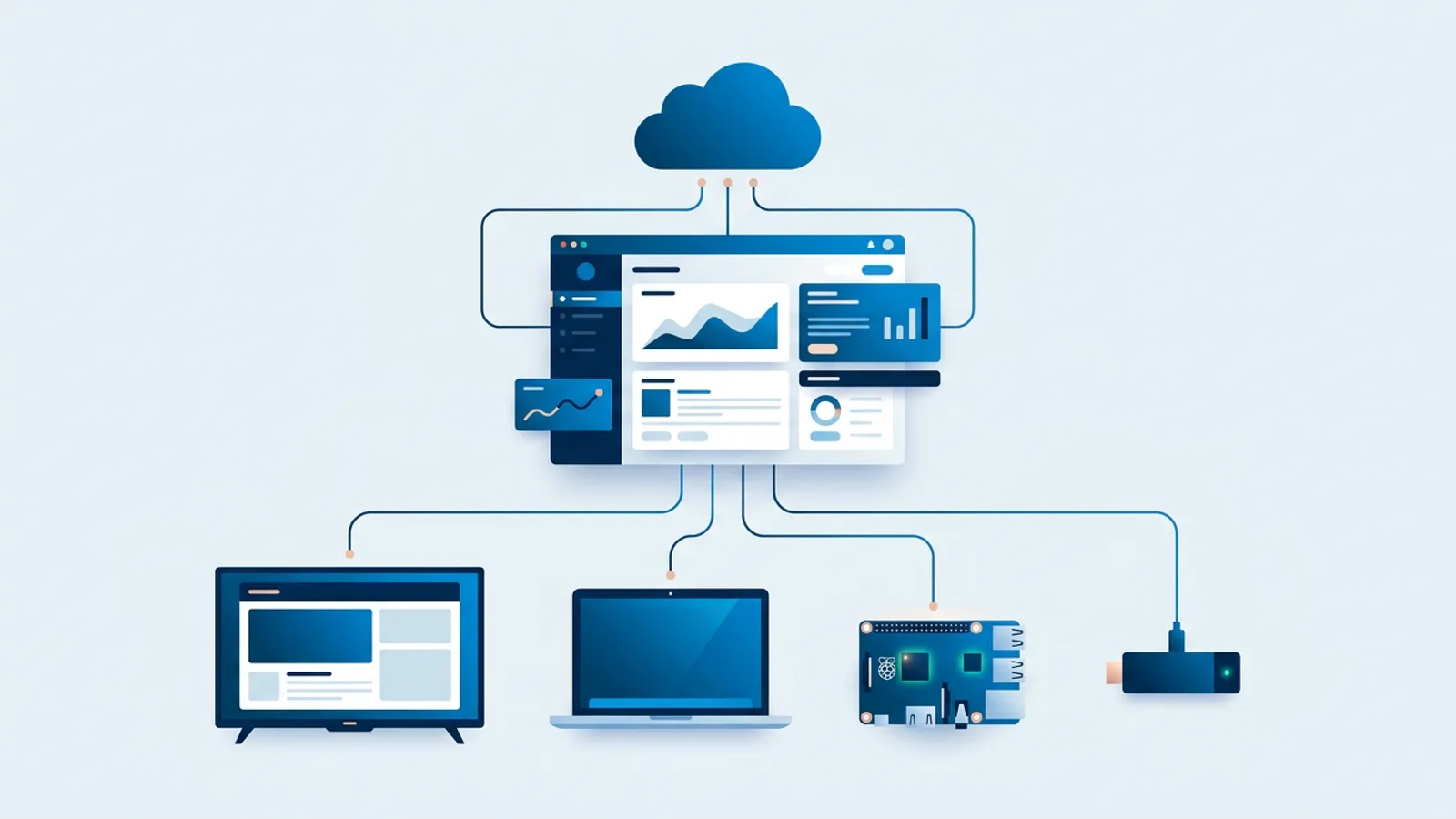
If you keep seeing "cloud digital signage" in vendor pitches and want a plain answer, here it is: cloud based digital signage software means your content, playlists and schedules live in a web dashboard on the vendor's servers, and the screen is just a player that fetches and displays whatever you've assigned to it. You log in from any browser, make a change, and it shows up on the screen without touching the TV or installing anything locally.
That's the whole idea. No local server to patch, no signage-specific software to install on a PC in a back room, no VPN to reach a machine sitting next to the till. You manage screens the same way you'd manage a shared document: from wherever you happen to be.
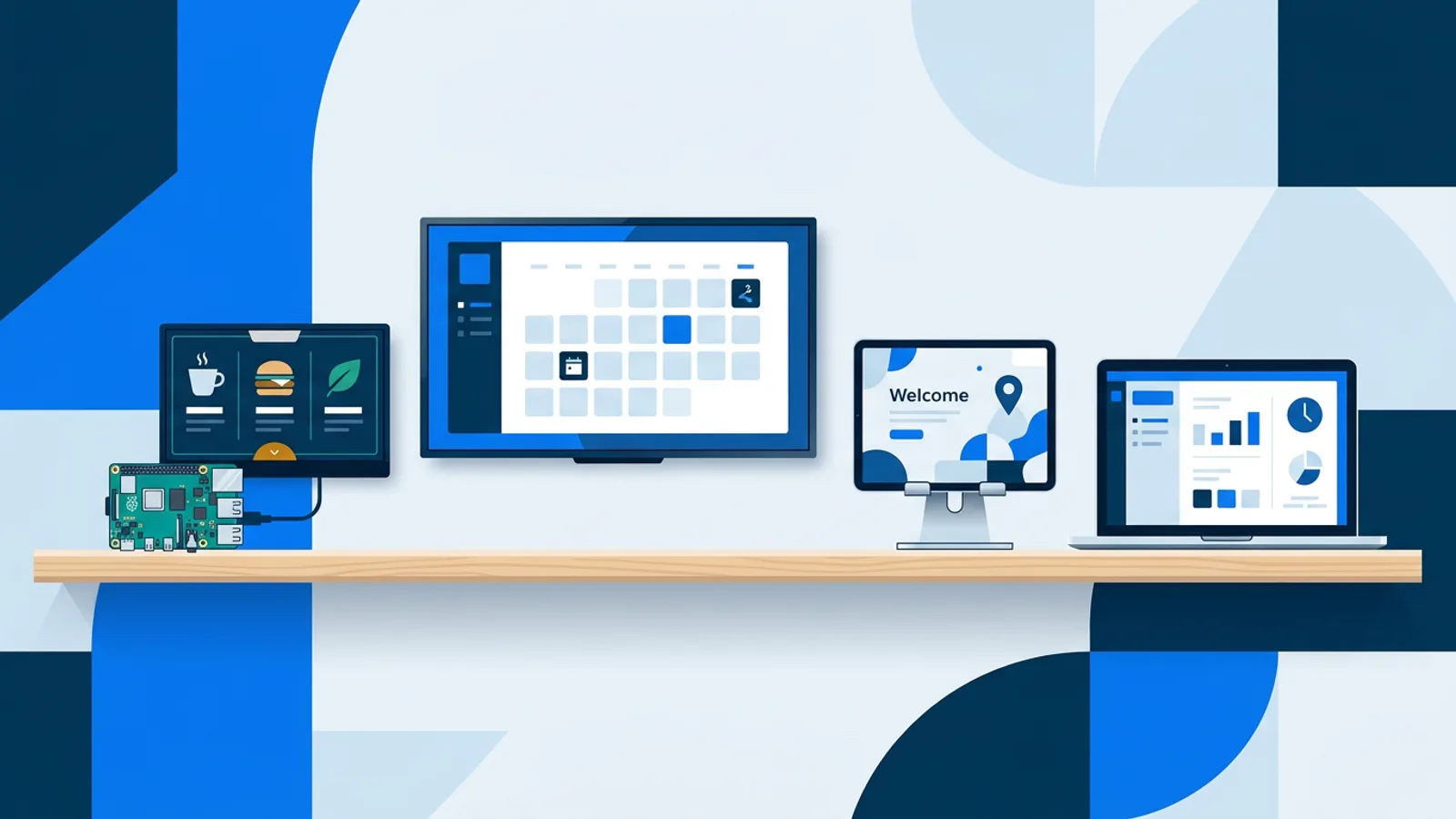
Because the software runs in the cloud, the screen side of the equation gets simpler too. A cloud signage player can be a Raspberry Pi, a smart TV's built-in browser, a Fire TV Stick running a browser app, or an old laptop propped behind a monitor. The player's job is small: open a URL, show what's pushed to it, keep running. We'll get into what that looks like with a device page like browser and smart TV signage, but the point holds across vendors, not just for one specific box.
What cloud based digital signage software actually means
Strip away the marketing language and a cloud digital signage system has three parts. First, a dashboard where you upload media, build playlists and set schedules. Second, a player, some piece of hardware or software running on the screen, that checks in with the dashboard and pulls down whatever it's supposed to show. Third, the connection between them, which is just the internet.
Compare that to an on-premise or self-hosted setup, where the scheduling software itself runs on hardware you own and maintain, often on the same local network as the screens. Self-hosting gives you more control over data and infrastructure, and for some organizations (regulatory requirements, no reliable internet, an existing IT team that wants to own the stack) it's the right call. Our self-hosted digital signage checklist covers when that tradeoff makes sense. Cloud signage trades some of that control for not having to run a server at all.
What this looks like day to day with TVpilot
TVpilot is one example of the cloud model, not the only way to build it, but walking through how it actually works makes the abstract idea concrete.
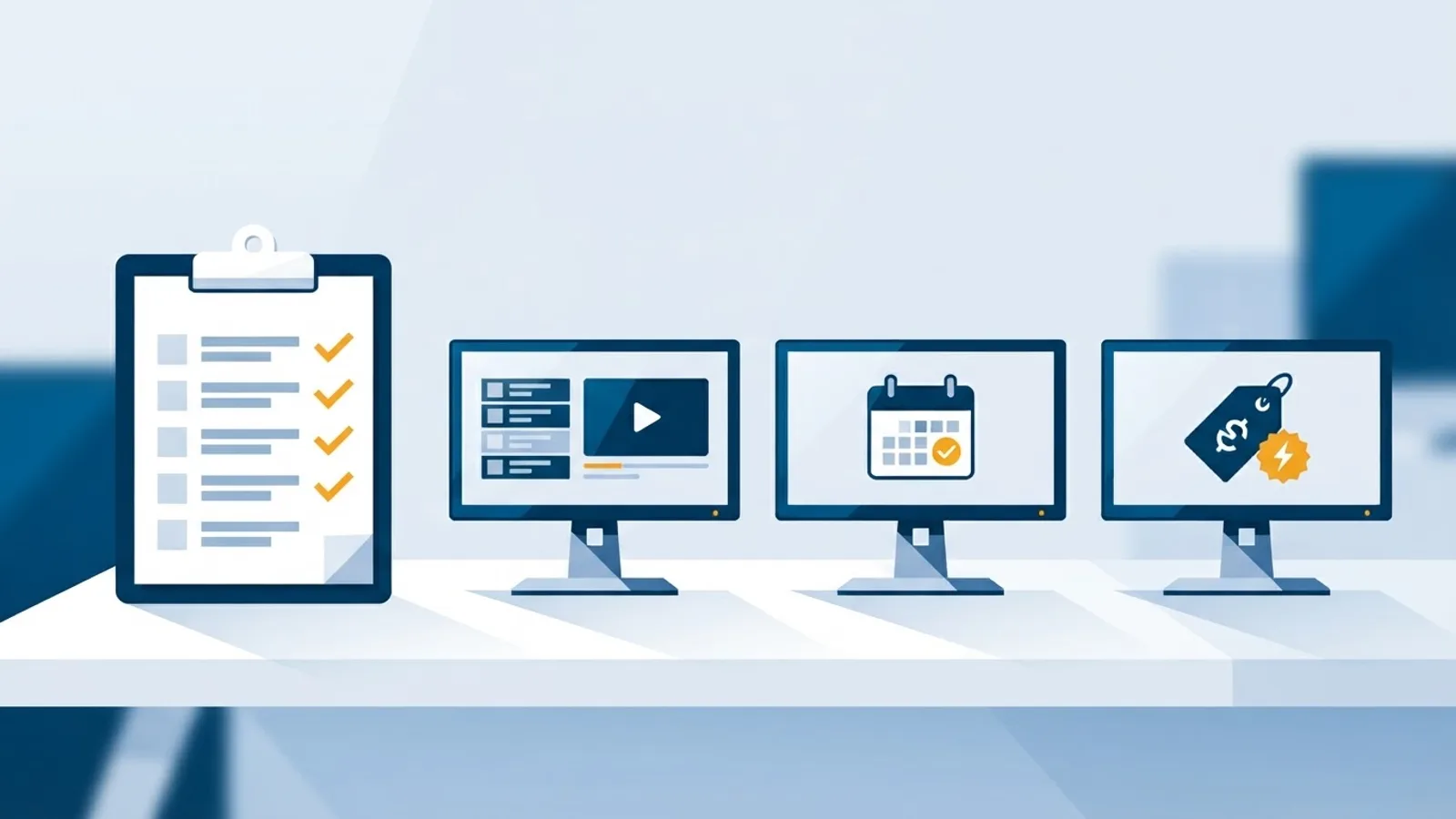
You build playlists in the dashboard: images, videos, web pages and PDFs, dragged into order, with transitions and per-slide durations. Each slide can also carry its own dayparting rules, so a lunch menu slide only appears on weekdays between 11:00 and 14:00, or a happy-hour promo only shows after 5pm, without you touching the playlist by hand every day.
For bigger structure, the Schedule page works on a calendar: you assign which playlist plays on a screen on which day, including one-off items for a specific event and weekly repeating slots for recurring patterns. A retail chain could plan an entire year of seasonal campaigns in one sitting; a restaurant could set breakfast, lunch and dinner menus once and let them rotate automatically. When nothing is scheduled, the screen falls back to a default playlist, so there's no risk of a blank slot on the calendar leaving a screen dark.
Sometimes you need to override all of that on the spot. "Show now" pushes any playlist to one or more screens immediately for a set window, 30 minutes, an hour, until a chosen time, or indefinitely, and the screen returns to its normal schedule automatically afterward. That's the practical difference between cloud signage and a screen with a USB stick in it: you can react to a last-minute closure or a flash sale from your phone without walking over to the TV.
Remote monitoring is the other half of the day-to-day picture. The dashboard shows whether each screen is online, its Wi-Fi signal, and (on the Raspberry Pi player) whether the TV itself is on or in standby. If a screen misbehaves, you can trigger a remote update or reboot from the dashboard instead of driving to the location. The Pi player also checks for updates daily at 3am and applies them automatically, so you're not manually patching software on-site.
Cloud signage isn't tied to one box
Cloud signage doesn't lock you into a single piece of hardware. Because the player is really just a browser pointed at a URL, the same TVpilot account can run on:
- A Raspberry Pi, using a one-command installer that sets up kiosk mode, auto-start, and a watchdog that restarts the player within about 10 seconds if it crashes.
- A smart TV's own browser, no extra box needed.
- A Fire TV Stick with a browser app installed.
- An old laptop or mini PC you already have sitting around.
That flexibility matters because it means you're not stuck if a vendor discontinues a specific stick, or if one location has different hardware than another. It also means you can start on whatever's cheapest or already on hand and swap hardware later without losing your content or schedules, since all of that lives in the dashboard, not on the device.
Being honest about the internet dependency
"Cloud" does mean the software needs an internet connection to push new content and schedule changes to a screen. If a location's internet goes down, the screen won't receive updates during the outage. On the Raspberry Pi player, though, the screen keeps playing whatever it last downloaded, so a brief outage doesn't mean a black screen, and the player reconnects and catches up automatically once the connection is back. Scheduled calendar items also keep following their planned times locally during an outage, since the schedule is already stored on the device. If your location has spotty or no reliable internet at all, it's worth reading about digital signage offline playback and bandwidth requirements before committing to any cloud vendor, TVpilot included.
Cloud vs self-hosted, at a glance
| Cloud (e.g. TVpilot) | Self-hosted | |
|---|---|---|
| Where scheduling software runs | Vendor's servers | Your own server/PC |
| Setup | Sign up, connect a player | Install and maintain server software |
| Access | Any browser, anywhere | Usually local network or VPN |
| Updates | Automatic | Manual, on you |
| Data location | Vendor's infrastructure | Your infrastructure |
| Best for | Teams without dedicated IT, multiple locations | Teams with existing servers, specific compliance needs |
Neither column is universally right. If you already run a server room and want everything on infrastructure you control, self-hosting is a reasonable choice, and our open source digital signage cost breakdown walks through what running your own stack actually takes to maintain. If you'd rather not run a server at all and just want screens that update from a browser, cloud signage is built for exactly that.
When TVpilot fits, and when it doesn't
TVpilot fits well if you want to manage one screen or a few dozen from a browser, don't want to run or patch a server, and are fine with an internet-dependent update path (with the Pi player's offline resilience as a buffer, not a substitute for connectivity). The Free plan covers a single screen with 250 MB of storage and no credit card, which is enough to try the actual workflow before paying anything.
It's not the right fit if you need a fully self-hosted, air-gapped, or open-source stack: TVpilot is hosted SaaS and isn't self-hostable. It also doesn't have a dedicated native app for Android TV or Fire TV yet; those run through the browser route rather than an installed app, which works fine but is worth knowing going in.
If you're still comparing the broader software landscape before picking anything, our digital signage software picks by use case is a reasonable next stop.
If the dashboard-and-browser model described here sounds like what you actually want, the fastest way to see it is to try it: sign up for free, connect a screen, and build your first playlist without needing a server or a credit card.
Frequently asked questions
Is cloud digital signage the same as web based digital signage software?
Yes, in practice they describe the same model: the software that manages content and scheduling runs on the vendor's servers and is accessed through a web browser, rather than being installed on a local PC or server. The screen itself is just a player that displays whatever the dashboard sends it.
Do I need an internet connection at every screen for cloud signage to work?
Yes, an internet connection is needed to receive new content and schedule changes. What happens during an outage depends on the player: with TVpilot's Raspberry Pi player, the screen keeps playing its last downloaded content during the outage and reconnects automatically once the connection returns, rather than going black.
Can cloud digital signage run on a smart TV without extra hardware?
Often yes. If the smart TV has a modern built-in browser, you can point it at the player URL directly with no separate box. Devices like a Fire TV Stick with a browser app, a Raspberry Pi, or an old laptop are other common options, since the player only needs to open a URL and stay running.
What's the real difference between cloud and self-hosted digital signage?
With cloud signage, the scheduling software runs on the vendor's servers and you access it through any browser, with automatic updates handled by the vendor. With self-hosted signage, you install and maintain that software on your own server or PC, which gives more control over data and infrastructure but adds the ongoing work of running and patching it yourself.