Hotel Lobby Digital Signage Ideas That Actually Work
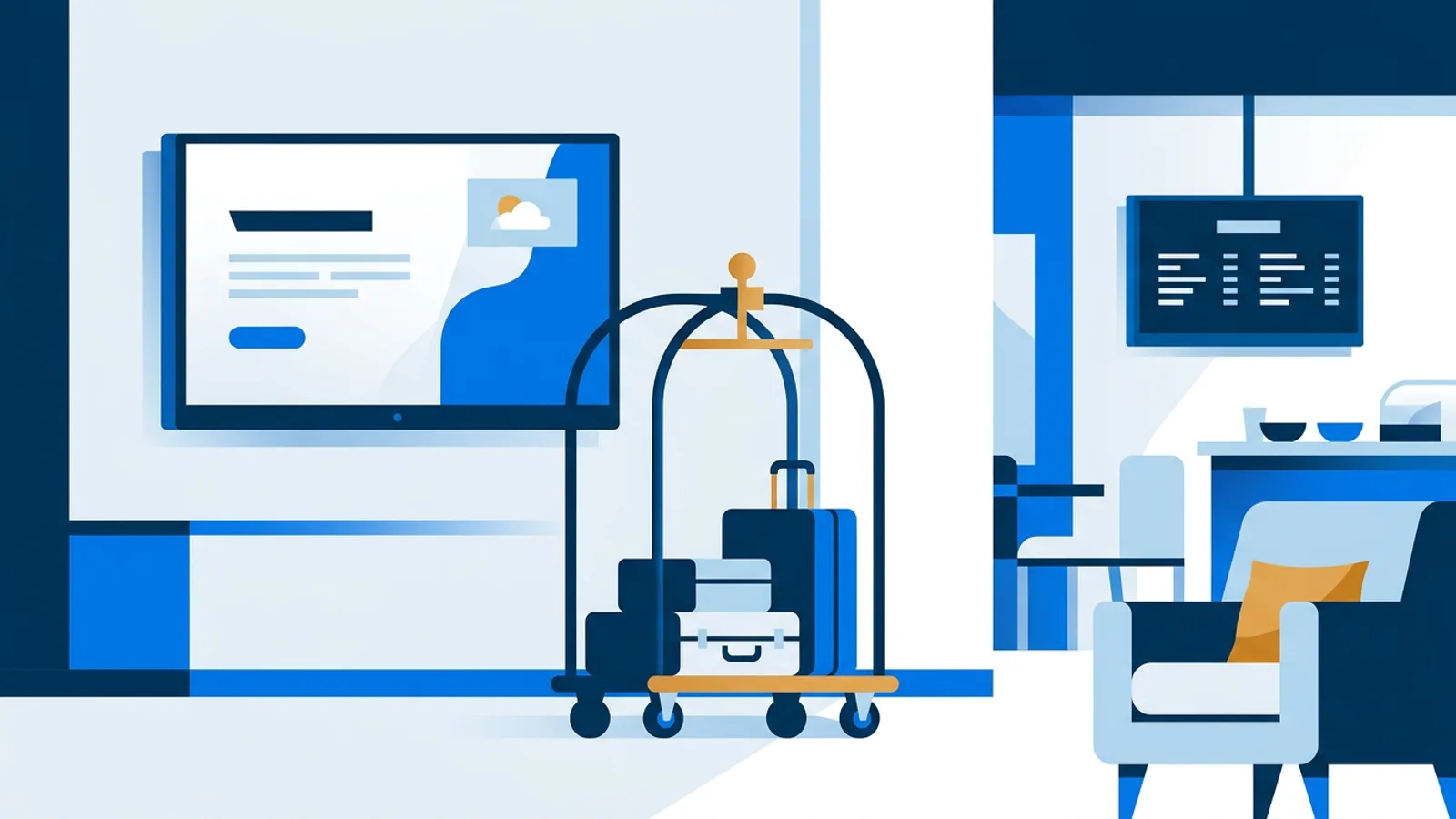
If your hotel lobby already has a smart TV mounted behind the front desk or over the breakfast buffet, you don't need to buy a new media player to turn it into signage. Every hotel lobby digital signage idea in this guide runs straight in the TV's built-in browser, using hardware you already own. That's the practical entry point for most properties: point the smart TV's browser at a signage player URL and start with a welcome screen, then add wayfinding, event schedules, breakfast hours and a weather widget as you go.
This is a practical rundown of what actually shows up on hotel lobby screens that guests find useful, plus honest notes on where a smart TV's browser falls short and a Raspberry Pi is the better call.
Why the TV you already own is the starting point
Most mid-range hotel TVs sold in the last five years, LG, Samsung, Sony, Hisense, ship with a usable browser even if there's no dedicated signage app for the platform. That's enough to run a full-screen playlist of images, PDFs and web pages on a schedule. No box under the desk, no extra HDMI cable, no extra power outlet behind furniture that already has three plugs fighting for space.
The catch: TVpilot doesn't have a dedicated Android TV or Fire TV app yet. On a smart TV, you open the browser, navigate to the player URL once, and leave it full-screen. On some TVs that's stable for months. On others, especially budget hospitality-grade sets with aggressive power-saving or an aging browser, the browser can restart, forget the page, or struggle with video. If that happens on your lobby TV, or if the TV is older with no usable browser at all, a Raspberry Pi player is the more reliable option: it boots straight into kiosk mode, restarts itself automatically if the display process crashes, and doesn't depend on the TV manufacturer's own software update cycle. The Raspberry Pi signage guide covers setup if you go that route.
Hotel Lobby Digital Signage Ideas: Welcome and Wayfinding
The first screen most hotels want is the one behind or beside the front desk: hotel name, a welcome message, maybe a rotating set of directions to the pool, gym, parking garage or nearest elevator bank. Keep the wayfinding portion simple, arrows and floor numbers, not a full map nobody can read from six feet away. For layout specifics, hierarchy, contrast, and how long each frame should stay up, see the welcome screen design guide.
Event and conference schedules
Properties with meeting rooms or a ballroom use the same lobby screen, or a second one near the elevators, to show today's events: room name, time, and which group is meeting where. Build this as a playlist slide updated once in the morning, or as a scheduled sequence so the 9am session and the 2pm session each get their own slide at the right time. Scheduling in TVpilot works per time slot and day of week, so a Monday conference agenda doesn't need manual swapping out on Tuesday if the pattern repeats.
Breakfast and restaurant hours, specials
A screen at the breakfast room entrance or restaurant hostess stand covering hours, today's specials, and a note about the bar closing time saves the front desk from answering the same three questions all morning. This is a good case for AI Studio: describe what you want, breakfast buffet hours, continental options, a coffee bar note, in a short brief and it generates a designed screen without any layout work. Swap it for a new brief when the season's specials change.
Weather and local information
A small weather widget in the corner of the welcome screen, or on its own slide, answers a question guests ask constantly: do I need a jacket, is it going to rain during the walk to the conference center. Pair it with a short slide of local information, nearest pharmacy, transit stop, recommended coffee shop, and a good chunk of front-desk small talk gets covered without anyone typing an answer twice a day.
Checkout reminders
Late in a guest's stay, a checkout-time reminder slide (checkout at 11am, express checkout available at the desk, luggage storage location) reduces the confusion that shows up in the lobby around 10:45 every morning. It doesn't need to be elaborate: one slide, a clear time, done.
What this setup can't do
TVpilot manages playlists, scheduling, widgets and remote screen monitoring. It does not integrate with your property management system, and it doesn't take room-service orders. If you're picturing a screen that pulls live room-ready status from your PMS or lets guests order towels, that's outside what any browser-based signage tool in this category does out of the box; you'd need a purpose-built hospitality platform for that. What you get here is control over what's displayed and when, plus the ability to check from a phone or laptop whether a given screen is actually online.
Content updates also need an internet connection to reach the screen. On a Raspberry Pi player, a dropped connection isn't fatal, the last playlist keeps looping and the player reconnects and catches up automatically once the network is back. On a smart TV browser, the same general idea applies, the page keeps showing whatever it last loaded, but recovery behavior depends more on that TV's own browser than on anything TVpilot controls.
In-room TVs: a separate conversation
Everything above covers shared, always-on lobby and public-area screens. In-room guest TVs are a different setup: guests expect to reach normal live TV and their own apps, not a locked kiosk screen, so most properties keep in-room signage limited to a welcome or hotel-info channel guests can select if they want it, rather than something forced full-screen. Treat that as its own project with its own remote, separate from the always-on public screens covered here.
Picking a plan for a hotel property
A single-property lobby screen fits the Free plan: one screen, 250 MB storage, AI Studio included, no credit card required. Once you're covering the breakfast room, elevators, and a conference-area screen, Starter (5 screens, 1 GB storage, €5/month) or Pro (25 screens, 10 GB storage, priority support, €19/month) cover most independent hotels and small chains. Larger properties or groups managing signage across multiple locations can contact TVpilot directly for Business pricing.
| Plan | Screens | Storage | Fits |
|---|---|---|---|
| Free | 1 | 250 MB | Single lobby TV |
| Starter | up to 5 | 1 GB | Lobby + breakfast + one meeting space |
| Pro | up to 25 | 10 GB | Multi-floor or multi-outlet property |
| Business | 25+ | 100 GB | Hotel groups, custom needs |
Is TVpilot the right fit for a hotel?
It's a good fit if your screens are basically web pages, playlists and widgets: welcome messages, hours, schedules, weather, wayfinding, and you'd rather manage them from a browser dashboard than install and update software on-site. It's a poor fit if you need native PMS integration, guest-facing ordering, or a dedicated Android TV/Fire TV app right now, since none of those exist yet. For most independent hotels and small groups running informational lobby and public-area screens, the browser-first approach with a Raspberry Pi fallback for older TVs covers the actual use cases without new hardware sitting under every screen.
Getting started
Pick the lobby TV first. Try the browser route by pointing it at a player URL; if it holds up over a few days, that screen is done. If it doesn't, or the TV has no real browser, add a Raspberry Pi. Build the welcome screen, add a weather widget, schedule the breakfast-hours slide to show only during breakfast hours, and expand from there. Sign up free and set up the first screen without a credit card.
Frequently asked questions
Can I run hotel digital signage directly on a smart TV without extra hardware?
Yes, for most modern smart TVs with a usable browser you can point it at a signage player URL and run it full-screen, which is the browser-first approach described in this guide. If the TV is older or its browser is unreliable, a Raspberry Pi player gives more consistent results.
Does TVpilot have an app for Android TV or Fire TV?
Not yet. Android TV and Fire TV devices currently run signage through their built-in browser rather than a dedicated app, the same route used for other smart TVs.
What happens to hotel lobby screens if the internet goes down?
Content updates need an internet connection, and a smart TV browser will keep showing whatever it last loaded until the connection returns. A Raspberry Pi player is more resilient: it keeps looping the last playlist and automatically catches up once the network is back.
Can TVpilot pull live data from our property management system?
No, TVpilot doesn't integrate with PMS software or handle guest ordering. It covers playlists, scheduling, widgets like weather, and remote screen monitoring, which is enough for welcome screens, event schedules, hours and wayfinding but not PMS-driven data.